Laser Vision Correction at Vinayaka Nethralaya
Freedom from glasses through LASIK, PRK & SMILE laser correction
For many people, dependence on glasses or contact lenses is a daily inconvenience they have lived with for years. Laser vision correction offers a permanent solution by reshaping the cornea to address the underlying refractive error — whether that is short-sightedness, long-sightedness, or astigmatism. Three established procedures are available: LASIK, which reshapes the cornea to improve visual clarity; PRK, a surface-based approach that treats the cornea directly without creating a flap; and SMILE, a newer flapless technique that removes a small disc of corneal tissue. Each procedure has its own advantages, and the right choice depends on the individual patient's corneal measurements, prescription, and lifestyle. At Vinayaka Nethralaya, a thorough pre-operative assessment is carried out before any recommendation is made.
LASIK, PRK & SMILE — all three procedures available
Honest, transparent procedure costs
Refractive surgery by an ophthalmologist with 40+ years of experience
Pre-operative assessment & procedure suitability :
Before any laser correction procedure, a comprehensive evaluation of your cornea is carried out. This includes corneal mapping, thickness measurement, pupil assessment, tear film evaluation, and a full refraction. The results are reviewed carefully to determine whether you are a suitable candidate and, if so, which of the three procedures is the most appropriate match for your corneal profile, prescription, and daily activities.
Understanding LASIK, PRK & SMILE :
LASIK involves creating a thin corneal flap, applying laser energy to reshape the tissue underneath, and repositioning the flap — most patients see clearly within a day. PRK treats the corneal surface directly without any flap, making it well suited to patients with thinner corneas or physically active lifestyles; recovery takes two to four weeks but corneal strength is fully preserved. SMILE uses a single laser to remove a precisely shaped piece of corneal tissue through a small incision — no flap is involved, anterior corneal nerves are largely undisturbed, and the risk of post-operative dryness is lower than with LASIK.
The laser correction procedure :
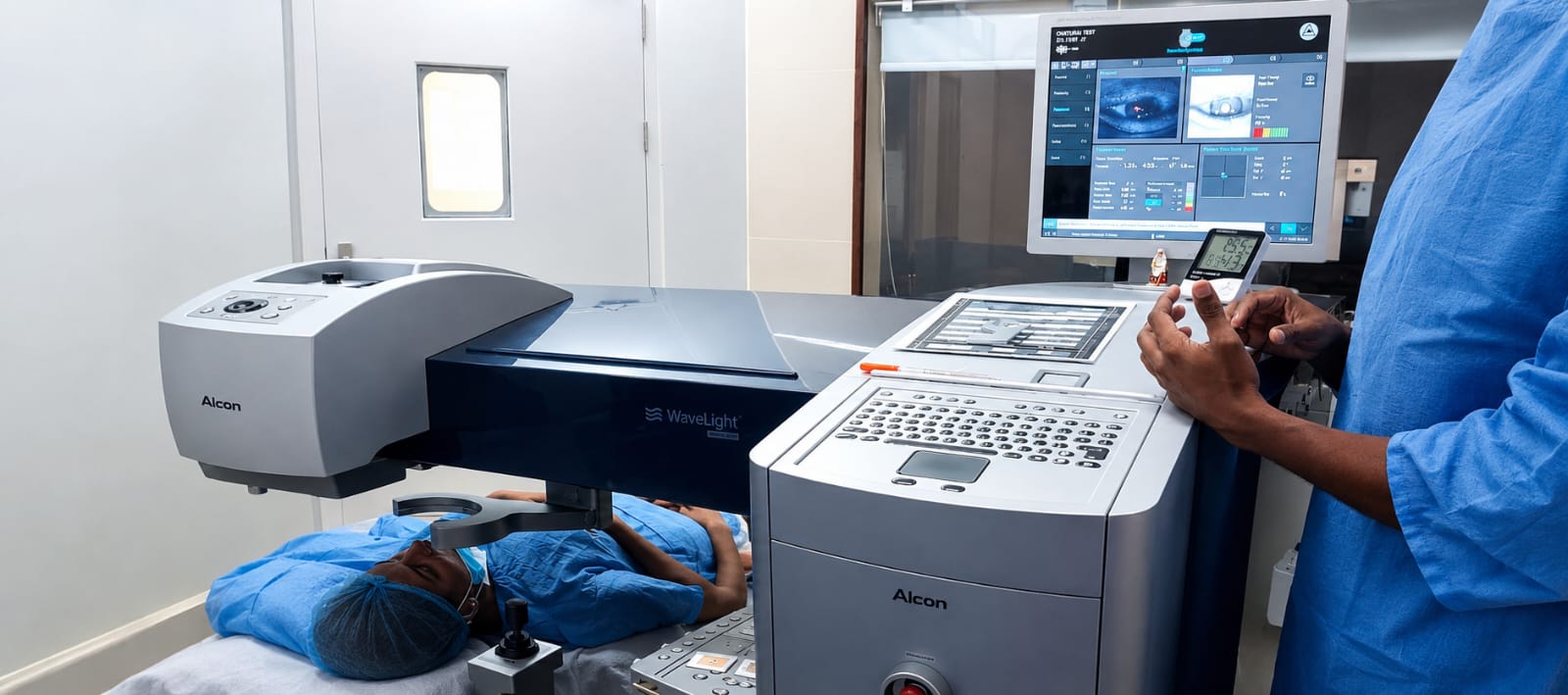
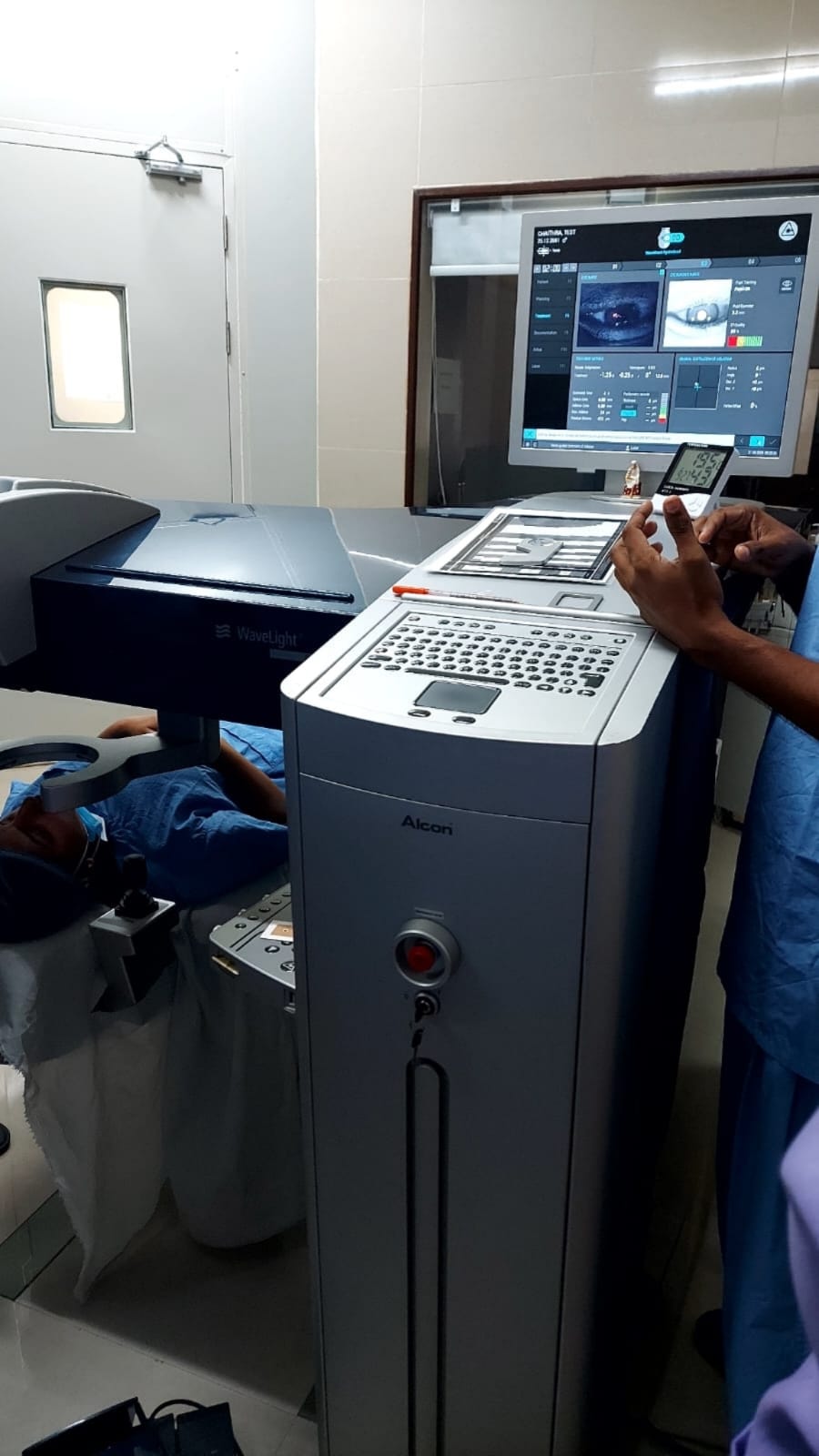
All three procedures are performed as day-care treatments using anaesthetic eye drops — no injections or overnight admission are required. Each eye takes approximately ten to fifteen minutes. During the procedure, eye-tracking technology monitors the position of your eye continuously, ensuring the laser is applied with precision regardless of any small involuntary movements. You remain awake and comfortable throughout and return home the same day.
Recovery & post-operative follow-up :
After the procedure, a structured follow-up programme is provided with review appointments at one day, one week, one month, and three months. LASIK and SMILE patients generally notice a clear improvement in vision within the first twenty-four to forty-eight hours. PRK patients experience a more gradual recovery as the corneal surface heals, with stable vision typically achieved within two to four weeks. Post-operative drops are prescribed for each procedure and written guidance is provided on activity, screen use, and what to watch out for during recovery.
Vinayaka Nethralaya offers all three established laser correction procedures, guided by a thorough pre-operative assessment and delivered by a surgeon with decades of ophthalmic experience. The goal of every consultation is to give you an honest picture of your options — including whether laser correction is genuinely appropriate for your eyes — so that any decision you make is fully informed. For patients who are suitable candidates, laser correction can significantly reduce or eliminate the daily dependence on glasses or contact lenses.
What is included
Your complete laser correction experience at our centre
Questions about laser vision correction