
Cataract Surgery at Vinayaka Nethralaya
Restoring clear vision through precise cataract surgery & advanced lens replacement
A cataract forms when the eye's natural lens gradually loses its transparency, leading to blurred vision, sensitivity to bright light, washed-out colours, and growing difficulty with everyday tasks like reading or driving at night. Left unaddressed, it continues to worsen over time. At Vinayaka Nethralaya, cataract surgery is performed using phacoemulsification — a gentle, ultrasound-based technique that removes the clouded lens and replaces it with a foldable intraocular lens chosen specifically for your eye. Our surgeon brings over four decades of ophthalmological experience to every procedure, with a strong emphasis on accuracy, patient safety, and achieving the clearest possible vision after surgery.
Phacoemulsification with foldable intraocular lens implantation
Straightforward, transparent treatment costs
Experienced ophthalmologist with 40+ years of surgical practice
Pre-surgical examination & planning :
Before any procedure, every patient undergoes a thorough eye assessment covering cataract grade, retinal condition, intraocular pressure, and corneal health. Precise measurements are taken to calculate the most suitable intraocular lens power for your eye, ensuring the surgical plan is tailored entirely to your individual visual needs and health status.
Intraocular lens selection :
Selecting the right replacement lens is central to a good surgical outcome. We offer Monofocal, Extended depth of focus, Multifocal and Toric intraocular lenses for optimised single-distance vision and toric lenses to address corneal astigmatism. The choice is guided by a detailed discussion of your daily visual demands, your occupation, and what you want to achieve from the procedure — so the lens implanted is the one that genuinely suits your life.
Cataract removal & lens implantation :
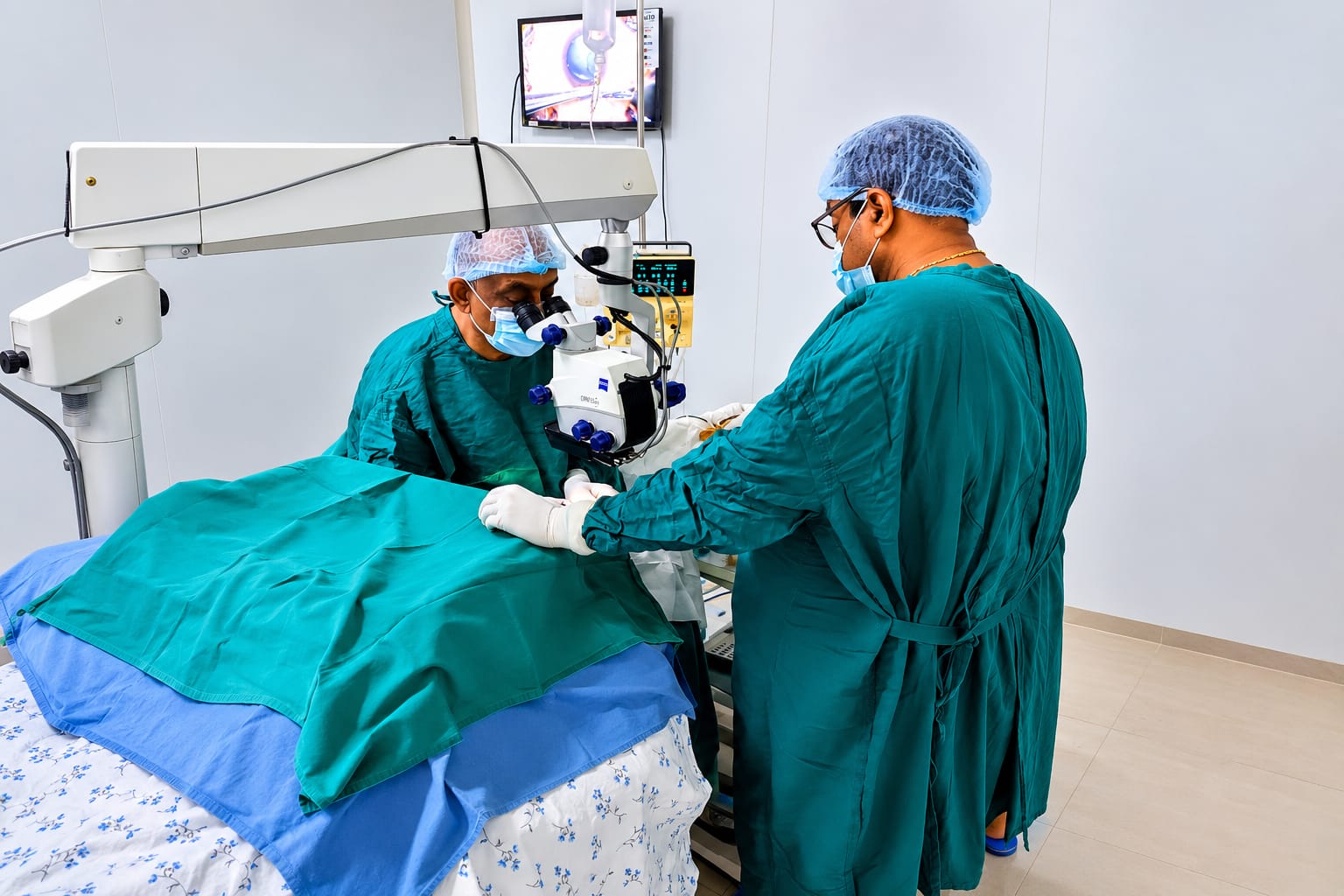
The procedure is carried out under topical anaesthetic eye drops — no injections and no overnight admission required. Using phacoemulsification, the clouded lens is broken down and carefully removed through a micro-incision before the replacement intraocular lens is folded and positioned within the natural lens capsule. The entire procedure typically takes around fifteen to twenty minutes and patients return home the same day.
Recovery & post-operative follow-up :
After surgery, patients receive a structured post-operative programme including antibiotic and anti-inflammatory eye drops, clear written guidance on care during recovery, and scheduled follow-up consultations to confirm healing and monitor the visual outcome. Most patients notice meaningful improvement within the first day or two. Full stabilisation of vision generally occurs over the following few weeks, with our team available throughout to address any concerns that arise.
At Vinayaka Nethralaya, cataract surgery is performed with the same careful attention to detail that has defined our practice since 1994. Every patient receives a thorough pre-operative evaluation, honest guidance on their options, and attentive follow-up care after the procedure. Whether your cataract is in its early stages or has advanced significantly, our team is equipped to assess your situation and guide you toward the outcome that best suits your vision and your life.
What is included
Your complete cataract surgery experience at our centre
Common questions about cataract surgery